Tuesday, Sep 29, 2026
1 SpaceX Starship Explodes After Pacific Splashdown Ends First Orbital Flight↩︎SPCX 💻 Tech Sep 24, 5:08 PM EDT 286/103 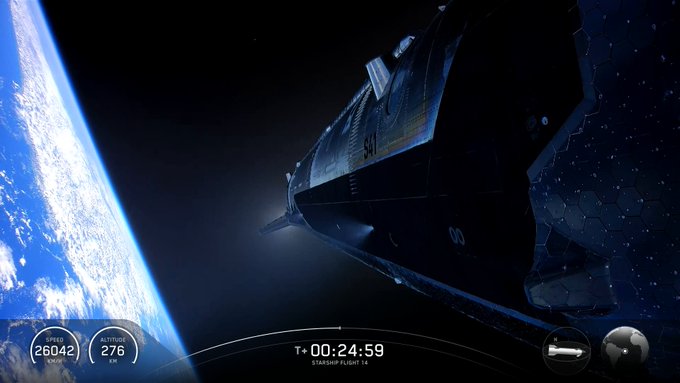 ▶
▶
▶Starship overturned and exploded after its controlled splashdown north of Hawaii, with residual fuel igniting after the ship reached the water. The vehicle had deployed all 26 Starlink V3 satellites, Starship's first operational payload, on a mission SpaceX cut from about six orbits over nearly 10 hours to roughly three hours after an engine shut down early during ascent.
A single Raptor vacuum engine shut down early during the ascent burn on Flight 14, and the ship's remaining five engines fired longer than planned to compensate and reach a passively safe suborbital trajectory. Controllers then cleared the three sea-level Raptors for further burns, and one relit for the insertion burn that put Starship into a roughly 275 km orbit of Earth for the first time. After the satellites deployed and contact was confirmed with each one, the flight team limited time in orbit out of caution over the engine issue, relit a single engine for Starship's first deorbit burn, and closed the flight with a landing burn and flip maneuver before splashdown on target in the northern Pacific, one of two landing zones cleared of sea and air traffic before launch.
The flight was Starship's first revenue-generating mission. Each V3 satellite adds about 1 Tbps of downlink capacity, roughly 26 Tbps across the payload, and future Starship flights can carry up to 60 of the satellites, matching the network capacity of about 20 Falcon 9 launches. The satellites will run on-orbit checkouts and raise their orbits before serving customers. Starship, 124 meters tall and designed to lift more than 100 tons to low Earth orbit, is the rocket NASA needs for its Artemis moon program. The launch came 66 days after the previous Starship flight, a slightly slower cadence than the 63 days between the two prior flights.